SONICOM
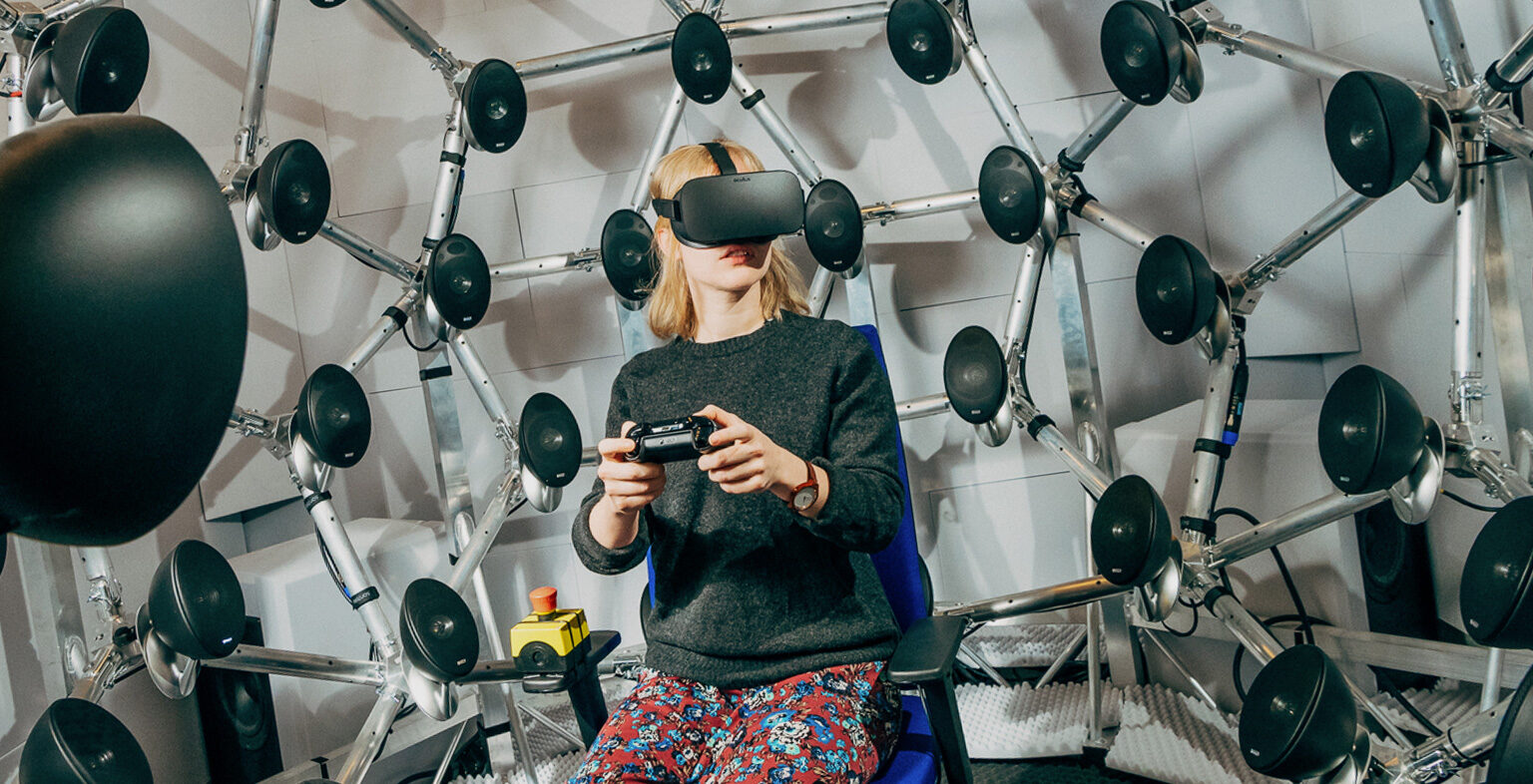
SONICOM is a European research project asking what happens to social interaction when virtual sound becomes indistinguishable from real sound. Ten partners across six countries, coordinated by Imperial College London, funded under Horizon 2020’s Future and Emerging Technologies programme, running from January 2021.
The founding idea is blending: putting people in a shared space where some participants are physically present and some are rendered, and making it impossible, from an auditory point of view, to tell which is which. Getting there means personalising the head-related transfer functions that let you place a sound in space, matching simulated reverberation to the room you are actually standing in, modelling how sound sources radiate, and using machine learning to predict how listeners will react to all of it.
Our role
Reactify sit in Work Package 4, Experience. The consortium’s five research packages produce toolkits, models and rendering techniques, and our job is to build the applications that take them out of the lab and put them in front of people. That means proof-of-concept AR and VR experiences on off-the-shelf hardware, designed so that the underlying research variables can be switched on and off and evaluated with real participants rather than only with researchers.
The Bird Song Chamber
Our current experience is a mixed-reality listening game. Four snowglobes sit on a table, each holding a bird. Pick one up and its call starts playing from somewhere in the room, and your job is to carry the globe to the spot the call is coming from. Eight loudspeakers stand around the room and every one has a virtual twin rendered inside a Quest 3, so any given call is either genuinely in the room or an illusion, chosen at random and never announced.
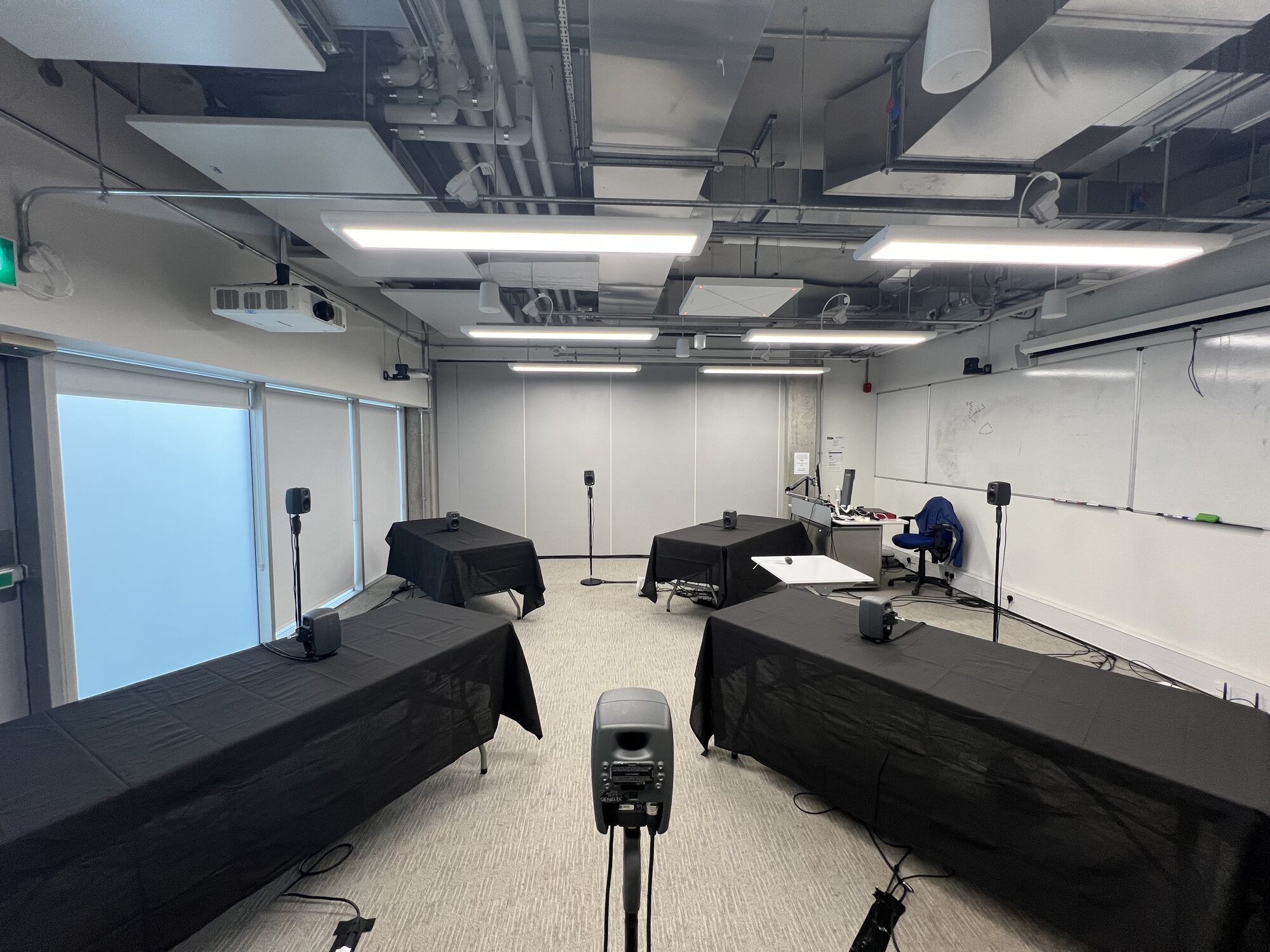
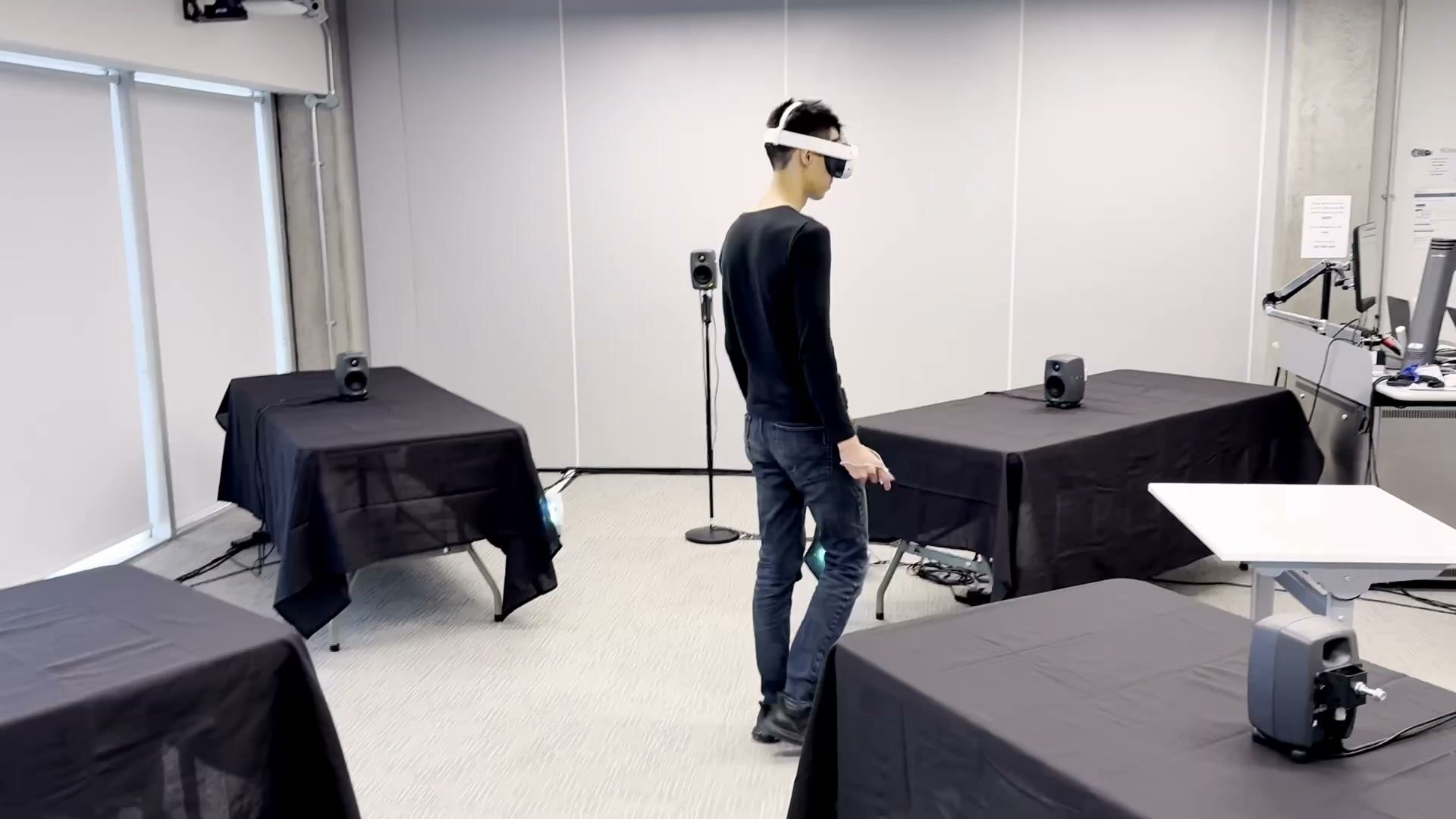
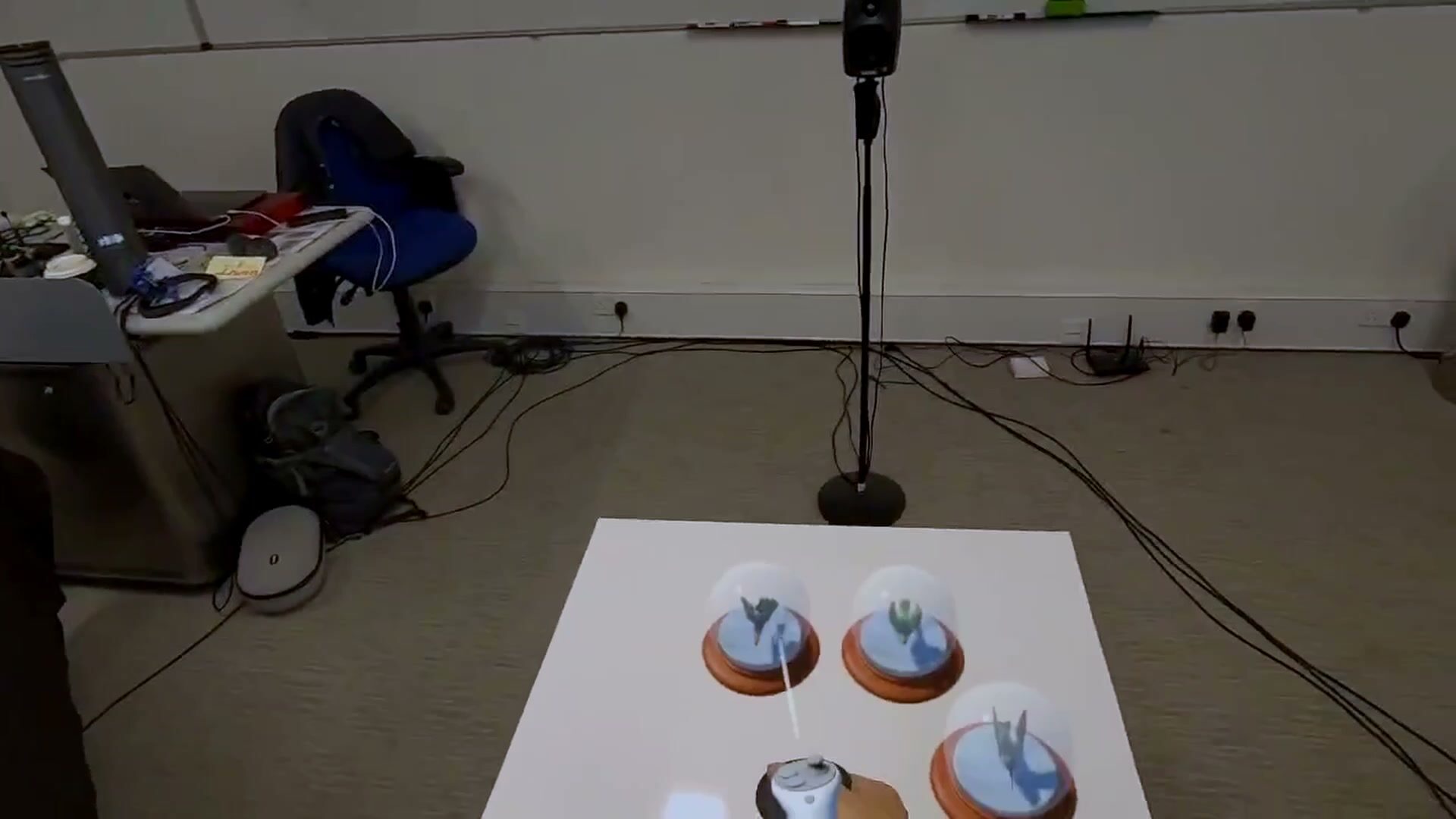
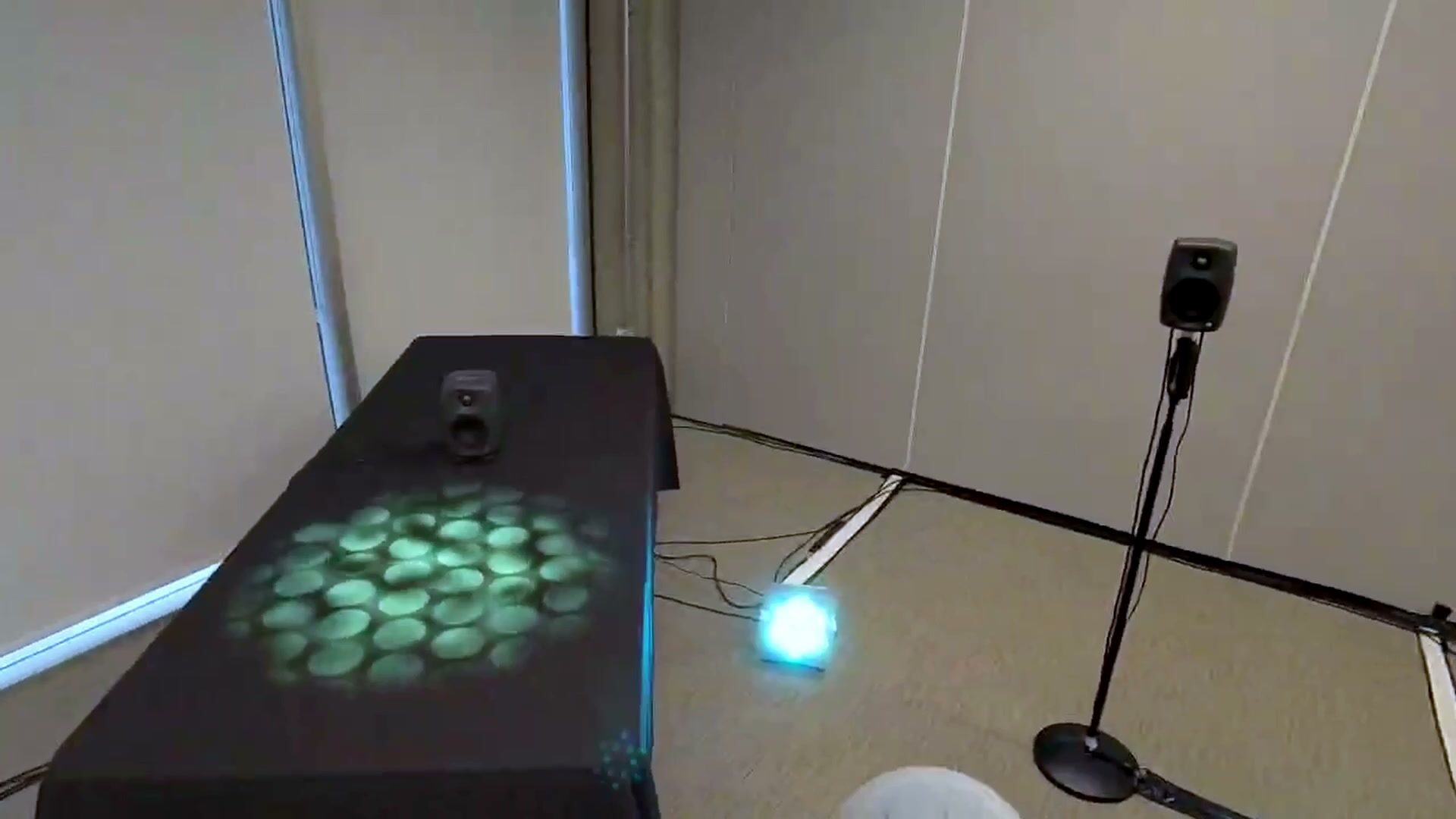
It works as a piece of public engagement and as an instrument at the same time. A Max/MSP patch drives the game and logs head position, object position and task timings throughout, so every visitor who plays it also produces a clean localisation dataset. Seventy-one people played it over two days at the Great Exhibition Road Festival in 2025, and the virtual birds turned out to be easier to find than the real ones.
Next for it: the project’s Binaural Rendering Toolbox in place of the stock spatialiser, so that personalised HRTFs, matched reverberation and source directivity become variables we can test in the same game.
The BRT Explorer
The Binaural Rendering Toolbox is the consortium’s C++ rendering library, developed by the University of Málaga and Imperial College London to support psychoacoustic research. We built two things around it.
The BRT Explorer is a standalone Unity application that puts the library’s features somewhere you can hear them. It has a binaural room impulse response explorer with a library space and a small trapezoid office to move between, a scattering delay network room where you change the size and the material of each surface and hear the absorption follow, and a directivity demonstration where you rotate a source and hear it turn away from you.
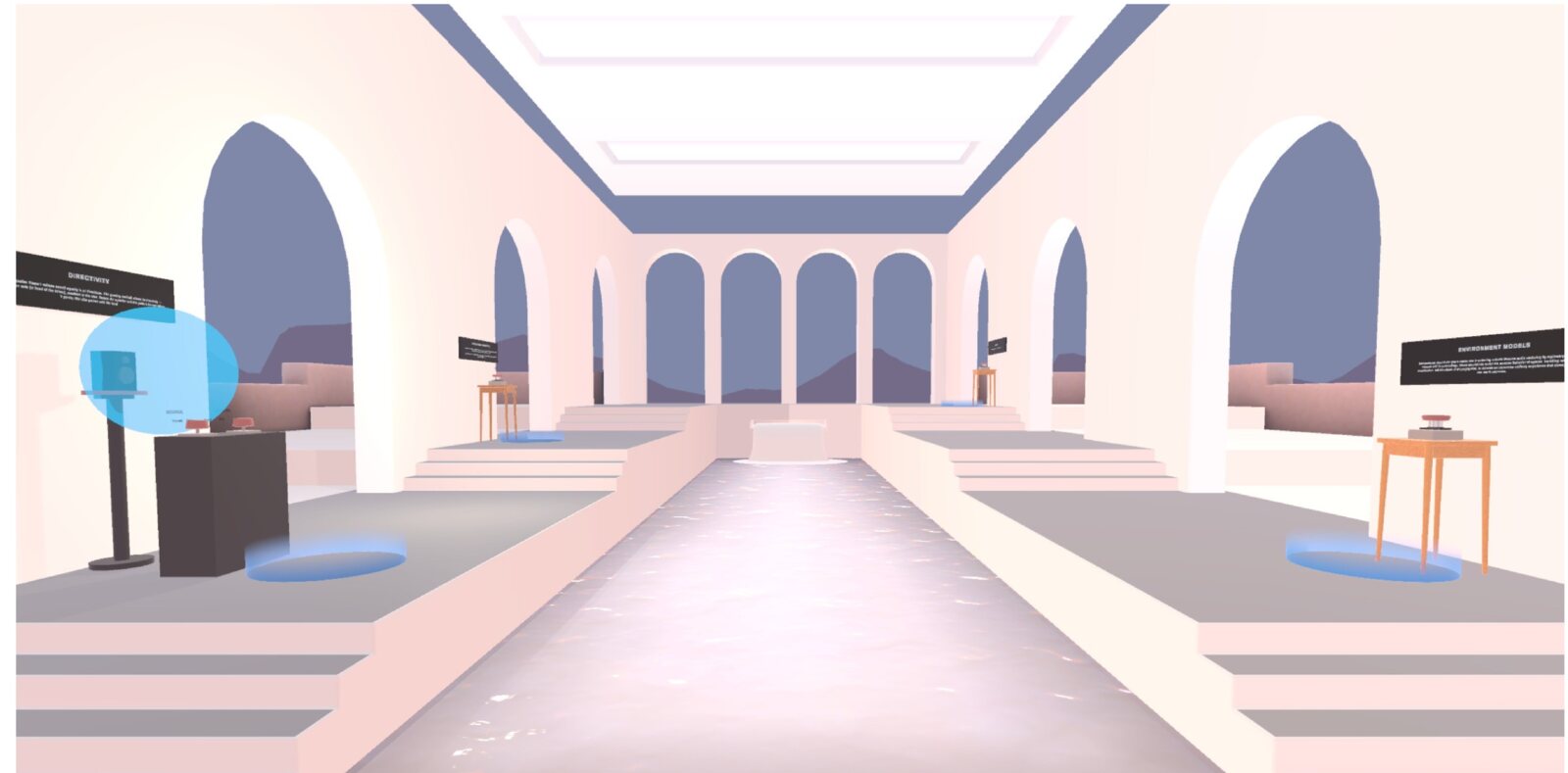
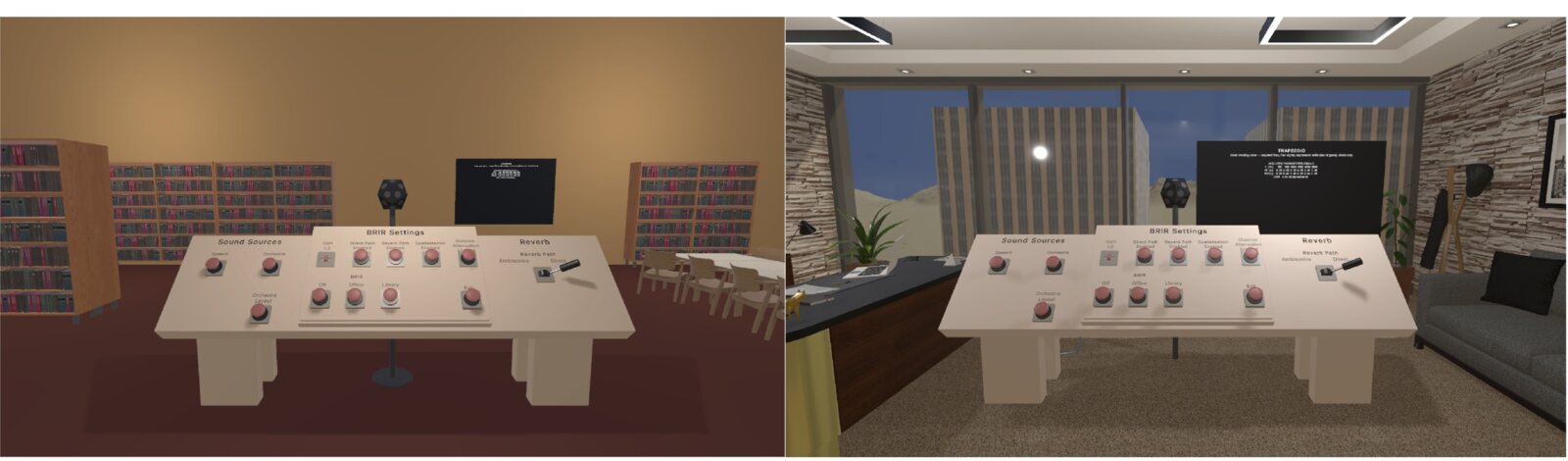
Underneath it sits the BRT-Unity wrapper, a native spatialiser plugin we wrote so that any Unity project can use the toolbox. It builds for macOS, iOS, Windows and Android including the Quest 3, integrates into Unity’s audio graph modularly enough to update render paths at runtime, and reads the SOFA format, so custom HRTFs and BRIRs from the SONICOM ecosystem drop straight in.
Project outputs
BRT-Unity — the native spatialiser plugin, open source. Drop it into a Unity project and the Binaural Rendering Toolbox renders through Unity’s audio graph on macOS, iOS, Windows or Android.
The Quest application — a networked VR demo running on that plugin, shown alongside the BRT Explorer at AES AVARiG 2026.
Not on the Meta store, so it needs sideloading: enable Developer Mode on the headset, then install with SideQuest or `adb install build.apk`.
Reactify’s earlier EU work on immersive audio and hearing was 3D Tune-In.

This project has received funding from the European Union’s Horizon 2020 research and innovation programme under grant agreement No 101017743.